NoSQL vs Relational Databases:
A Comprehensive Comparison
NoSQL and Relational databases are two distinct approaches to data storage and management, each with its own strengths and weaknesses. The choice between the two often depends on the specific needs of an organization.
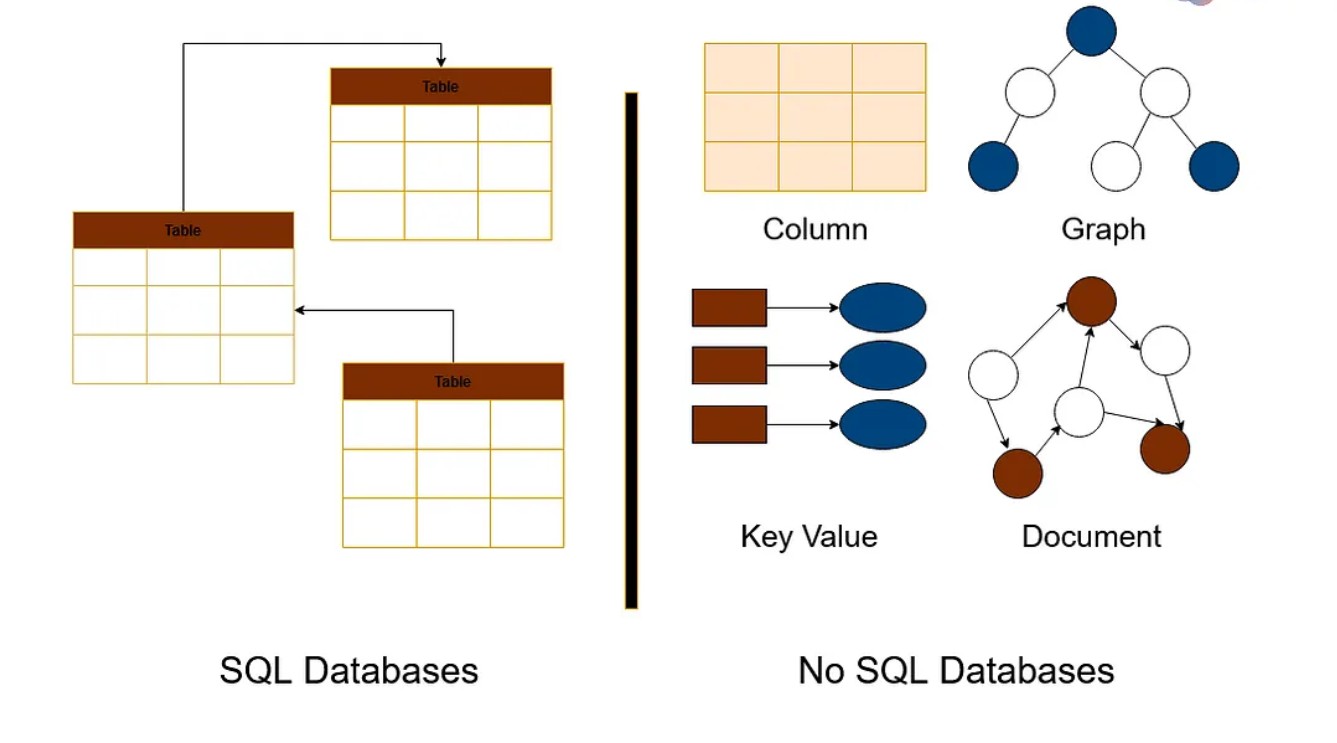
Relational Databases
Relational databases, exemplified by MySQL, PostgreSQL, and Oracle, are structured around tables, rows, and columns. Data is organized into relationships, often defined by primary and foreign keys. This structure provides a clear and predictable way to manage data, making it suitable for applications that require complex queries and transactions.
Advantages:
- Data integrity: Relationships ensure data consistency and accuracy.
- ACID properties: Relational databases guarantee atomicity, consistency, isolation, and durability of transactions.
- SQL: The powerful SQL language provides a flexible way to query and manipulate data.
- Mature technology: Relational databases have been around for decades, with well-established tools and practices.
Use Cases:
- Online banking: Requires high data integrity and complex transactions.
- E-commerce: Needs to manage product catalogs, customer orders, and inventory.
- Enterprise resource planning (ERP): Handles various business processes, from finance to human resources.
NoSQL Databases
NoSQL databases, such as MongoDB, Cassandra, and Redis, are more flexible in terms of data structure. They can handle unstructured, semi-structured, or structured data, and often scale horizontally by adding more nodes.
Advantages:
- Scalability: NoSQL databases can handle massive amounts of data by distributing it across multiple nodes.
- Flexibility: They can accommodate different data models, making them suitable for rapidly changing applications.
- Performance: NoSQL databases can often provide better performance for certain types of workloads, especially when dealing with large datasets.
- Cost-effectiveness: They can be more cost-effective than relational databases for certain use cases, especially when dealing with massive amounts of data.
Use Cases:
- Real-time analytics: Requires fast processing of large datasets.
- Content management systems: Handle unstructured data like text, images, and videos.
- Internet of Things (IoT): Collects and processes large amounts of sensor data.
- Mobile applications: Need to handle rapidly changing data and high traffic loads.
Choosing the Right Database
The choice between NoSQL and relational databases depends on various factors, including:
- Data structure: How structured is your data?
- Query complexity: How complex are your queries?
- Scalability requirements: How much data do you need to store and process?
- Performance needs: What are your performance requirements?
- Transaction requirements: Do you need to ensure data integrity and consistency?
In my organization, I would likely use a combination of both NoSQL and relational databases. For example, we might use a relational database for core business operations that require strong data integrity and complex queries, while using a NoSQL database for analytics, IoT data, or content management.
Ultimately, the best approach is to evaluate the specific needs of your organization and choose the database that best aligns with those needs.